I challenge you to find a saying that is more of a cliche in the American vernacular. To so many, "home is where the heart is" represents a warm sentiment enabling us to establish a sense of comfort in the face of unfamiliarity and stress. Yet over the past few days, I've realized that this phrase and the feelings it embodies, are much more complex than I had at first believed.
My time in Scotland is almost over, and not a moment too fast. The mystique and excitement of the castles, cathedrals, and brilliant scenery had faded. Maybe this is because my parents have simply run out of things to do. This seems rather interesting considering our initial excitement of traveling across the pond and our endless lists of things to do and places to see. However, what seemed impossible--that we would ever get sick of Scotland--seems to be occurring. It's not that we don't like this place, but more so that we just need to go home. I wonder whether the relative familiarity of the UK has something to do with it. I feel that it would be easier to get overwhelmed in a country where a different language was spoken and where an entirely different culture prevailed, yet I feel that one would not yearn for home as much. No longer am I struck by wonder but just sheer monotony, and I wish this to end as quickly as possible.
For almost 5 weeks, Bridge of Allan has been where our hearts were, literally, and thus it has been home. Despite it being someone else's house--a fact which is still a little bit weird--we have made it our own. We've bought groceries, we've walked down the street as if we've lived here for years and years, and it's been the bed, the living room, and the kitchen that I am the most familiar with.
Then there's the more figurative "home." Like millions of people across the world, my family ties its collective ancestry to these islands. While the McCalls and the Thompsons are not relative newcomers to the US there is a wonderful feeling of going home which occurs when one steps foot on these ancient lands. Last weekend, more than 40,000 people attened the Homecoming Celebration in Edinburgh, people just like us--though many were far more obsessed with family heritage, tartan, and kilts, as I--descended on Holyrood Park to gather as one. There were Americans, Canadians, Australians, South Africans, New Zealanders, and more, all of whom felt a connection to this land.
That sentiment of going home was matched yesterday. During a recent geneaology conference which my dad attended in Glasgow he discovered the home town of a line of Campbells (my great-grandmother's surname) who came from Kilmartin, a tiny village in Argyll--a county along Scotland's western coast. Thus, it was necessary for us to travel there to see it for ourselves. The culmination of the journey was finding the gravestones of many Campbells, most related directly to us, who had called that tiny place home for hundreds of years. While much of the excitement of tracing one's family is lost on me I came to appreciate that sense of going home. While I had never, and may never again see Kilmartin, I know that that and many other sites around Scotland and Northern Ireland, are places that my family have called home in the past. While many of these sites have no contemporary connection to my family knowing that your bloodline can be traced to a particular place thousands of miles away is something that I hope all people can one day experience.
So what does this all mean? I seem to be rambling on, probably a result of fatigue and hunger. Yet, what I'm really saying is that it's time to go home. This is exactly what I was feeling five weeks ago, as we got on the plane to come here. I love Scotland, I love its people, its scenery, its sport. Yet Scotland is not my home. I may feel the twang of ancient family connection, the love of Rangers, the love Irn Bru, and the love of Glasgow and Edinburgh. Yet I'm an American, my home is in Maine.
I feel it to be an oversimplifcation to state that one must only call one place home. My ancestral home is here, my permamnent home is there. While I will return to Scotland in January for five whole months the sentiment will be must different. I will be here surounded with people my own age, not stuck with two parents for the entire time. I will be free to roam and explore without encumbrances. And most of all I will know what to expect. Until then, the time has come to be reunited with friends and family, house and job, and settle back in to the good old boring life which awaits.
Tuesday, July 28, 2009

Thursday, July 16, 2009
The water of life
"Freedom and Whisky gang thegither" --Robert Burns
While Aberdeen may have lacked a certain something, the day that followed was the best I've had in Scotland so far.
Today consisted of two main events. The first was Balmoral Castle. Situated in some of the most beautiful country I've ever seen, Balmoral is the Queen's "country home." It's actually over 50,000 acres of land situated in the highlands. The castle itself is beyond words. It has a certain rugged beauty that doesn't exist in other castles. It was oringinally built by Queen Victoria in 1855 and has been the royal residence ever since. Currently, the entire royal family spends the month of August at Balmoral, enjoying all of the simple pleasures that they can't have in London. The castle is surrounded by beautiful mountains on all sides and has acres upon acres of gardens and landscapes that can take the breath away. I know that I'm not usually the biggest nature enthusiest, or lover of royalty, but this was something else. The reverence and respect that the British people--even the Scots--have for the Royals is astounding. Even in an age where royalty is seen as superfluous and over-the-top the royal family still garners a lot of admiration. All in all it was a wonderful time.
The last stop was the Royal Lochnagar whiskey distillery outside of Balmoral. Initially we were going to go father into the Highlands to tour a still but we decided that this was far more practical. The entire experience was a true delight. The distillery, although owned by an international beverage company, is very small and very traditional. We saw the entire facility, including the warehouse full of oak barrels, and got to sample the goods. I've recently started to enjoy whiskey. Not only do I find it a pleasurable drink but it bears a certain admiration in my family. My grandfather worshiped the drink. To him, single malt whiskey (usually Glenlivet) was something that could make the world good again. He was somewhat of a hapless man at times, but when the whiskey was poured life had a different sort of glow. Although he's been gone for six years now I felt that visiting Scotland and especially a distillery--places he would have loved to have seen--was keeping his memory alive. So, along with the tour and the drink being extradordinary, the spirit of my grandfather made it all the better.
Finally, we drove home. We've made this entire trip using a 2002 AAA atlas which has been very reliable yet at times outdated. We had no idea what this trip home would be like, except long. So when we found ourselves in the middle of the Highlands were were overjoyed. The road was narrower than I would have liked but as it wove in and around the countryside I couldn't help but be in awe. Mountains ran along our sides, heather dotted the landscape, and sheep far outnumbered people. At times the road was so steep or dippy that I feared for my life, but the experience will be one that I will never forget.
While Aberdeen may have lacked a certain something, the day that followed was the best I've had in Scotland so far.
Today consisted of two main events. The first was Balmoral Castle. Situated in some of the most beautiful country I've ever seen, Balmoral is the Queen's "country home." It's actually over 50,000 acres of land situated in the highlands. The castle itself is beyond words. It has a certain rugged beauty that doesn't exist in other castles. It was oringinally built by Queen Victoria in 1855 and has been the royal residence ever since. Currently, the entire royal family spends the month of August at Balmoral, enjoying all of the simple pleasures that they can't have in London. The castle is surrounded by beautiful mountains on all sides and has acres upon acres of gardens and landscapes that can take the breath away. I know that I'm not usually the biggest nature enthusiest, or lover of royalty, but this was something else. The reverence and respect that the British people--even the Scots--have for the Royals is astounding. Even in an age where royalty is seen as superfluous and over-the-top the royal family still garners a lot of admiration. All in all it was a wonderful time.
The last stop was the Royal Lochnagar whiskey distillery outside of Balmoral. Initially we were going to go father into the Highlands to tour a still but we decided that this was far more practical. The entire experience was a true delight. The distillery, although owned by an international beverage company, is very small and very traditional. We saw the entire facility, including the warehouse full of oak barrels, and got to sample the goods. I've recently started to enjoy whiskey. Not only do I find it a pleasurable drink but it bears a certain admiration in my family. My grandfather worshiped the drink. To him, single malt whiskey (usually Glenlivet) was something that could make the world good again. He was somewhat of a hapless man at times, but when the whiskey was poured life had a different sort of glow. Although he's been gone for six years now I felt that visiting Scotland and especially a distillery--places he would have loved to have seen--was keeping his memory alive. So, along with the tour and the drink being extradordinary, the spirit of my grandfather made it all the better.
Finally, we drove home. We've made this entire trip using a 2002 AAA atlas which has been very reliable yet at times outdated. We had no idea what this trip home would be like, except long. So when we found ourselves in the middle of the Highlands were were overjoyed. The road was narrower than I would have liked but as it wove in and around the countryside I couldn't help but be in awe. Mountains ran along our sides, heather dotted the landscape, and sheep far outnumbered people. At times the road was so steep or dippy that I feared for my life, but the experience will be one that I will never forget.
The trip up the coast
I have just returned from what might have been the best day in a long while--the culmination of an overnight trip up the east coast to Aberdeen and back again. The recap is as follows:
We began the jaunt by driving up to St. Andrews, home of the oldest university in Britain--founded in 1410. While the Uni was nice to see the main attraction in the town are its cathedral and castle. Both are in ruin but they hearken back to the day when St. Andrews was the ecclesiastical capital of Scotland, housing some of the human remains of Andrew, Jesus' disciple. Anyway, the coast really reminds me of Maine--the smell of the salty air, the gorgeous coast line, and of course all the tourists. I think it was the only time in the past three weeks when I've actually missed Maine--the land that is, I seem to always miss the people.
Next it was up to Dundee. As the guide book spelled out clearly, Dundee is a nice city but doesn't have much for the tourists. They tell the truth. Dundee is located right along the River Tay, making it a large port city. However, it's relatively low class and rather ugly--no offense to those that call it home. So, the most we saw was a drive along the main street and a stop at a Shell station for "petrol" which was a relative bargain at only 99p per liter. Yes, that's right, 99p a liter.
The to Abroath--a one hit wonder. It houses the ruins of Arbroath Abbey, where in 1320 the Declaration of Abroath was signed, a document which was written by Scottish nobles to the Pope declaring Scotland's independece. We were the only ones there, except for a large group of young Muslim girls, probably from Egypt. It was a nice stop, but the town obviously has seen better days.
Last was Aberdeen. We had never seen Aberdeen so the whole family agreed that we should make the nearly 4 hour drive north to see it. Aberdeen sucked. Well, most of it did. Aberdeen, like Dundee, is a port city. However, Aberdeen serves as Scotland's oil capital, receiving a great amount of imports from all over the world. So, we unknowingly checked into a hotel for the night. It seemed nice enough, rather basic but nice. Then, because we were so tired, we went to the restaurant in the lobby for dinner. 10 pounds for a bleeping burger. Little did we know at the time that the hotel served business travelers, mostly oil related, whose companies didn't care what the bill was. So, we ate our below average meals and paid an arm and a leg. The next morning we explored. Aberdeen is known as the gray city because its buildings are predominantely built from granite. We did manage to see Pittodrie Stadium, home of Aberdeen FC, a fun attraction. Other than that we just got lost in the city center for a while and left town.
Good ridance.
We began the jaunt by driving up to St. Andrews, home of the oldest university in Britain--founded in 1410. While the Uni was nice to see the main attraction in the town are its cathedral and castle. Both are in ruin but they hearken back to the day when St. Andrews was the ecclesiastical capital of Scotland, housing some of the human remains of Andrew, Jesus' disciple. Anyway, the coast really reminds me of Maine--the smell of the salty air, the gorgeous coast line, and of course all the tourists. I think it was the only time in the past three weeks when I've actually missed Maine--the land that is, I seem to always miss the people.
Next it was up to Dundee. As the guide book spelled out clearly, Dundee is a nice city but doesn't have much for the tourists. They tell the truth. Dundee is located right along the River Tay, making it a large port city. However, it's relatively low class and rather ugly--no offense to those that call it home. So, the most we saw was a drive along the main street and a stop at a Shell station for "petrol" which was a relative bargain at only 99p per liter. Yes, that's right, 99p a liter.
The to Abroath--a one hit wonder. It houses the ruins of Arbroath Abbey, where in 1320 the Declaration of Abroath was signed, a document which was written by Scottish nobles to the Pope declaring Scotland's independece. We were the only ones there, except for a large group of young Muslim girls, probably from Egypt. It was a nice stop, but the town obviously has seen better days.
Last was Aberdeen. We had never seen Aberdeen so the whole family agreed that we should make the nearly 4 hour drive north to see it. Aberdeen sucked. Well, most of it did. Aberdeen, like Dundee, is a port city. However, Aberdeen serves as Scotland's oil capital, receiving a great amount of imports from all over the world. So, we unknowingly checked into a hotel for the night. It seemed nice enough, rather basic but nice. Then, because we were so tired, we went to the restaurant in the lobby for dinner. 10 pounds for a bleeping burger. Little did we know at the time that the hotel served business travelers, mostly oil related, whose companies didn't care what the bill was. So, we ate our below average meals and paid an arm and a leg. The next morning we explored. Aberdeen is known as the gray city because its buildings are predominantely built from granite. We did manage to see Pittodrie Stadium, home of Aberdeen FC, a fun attraction. Other than that we just got lost in the city center for a while and left town.
Good ridance.
Sunday, July 12, 2009
July 12--What It Means Over Here
So today is 12 July. To many or most of us in the States this simply another day, but being keenly aware of such things I felt the need to share what this day means to many natives of Scotland and Northern Ireland.
On July 12, 1690, William of Orange and his Protestant troops won the Battle of the Boyne, a victory which capped the Glorious Revolution and the restoration of a Protestant England. Today it is celebrated throughout the isles as Orangemen's Day--a day of parades and merrymaking.
However, these celebrations have a rather nasty tone to them. The centuries old conflict in Northern Ireland, seeing the death of thousands of people still lives on in many of these celebrations. While the festivities are seen by many to be more a festival celebrating Ulster heritage, these parades and festivals are seen as racist and inflamatory by most.
What's my connection to all of this? Well, despite the fact that I trace a good deal of my heritage to Scottish immigrants to Ireland and then the US, I am an adamant supporter of Glasgow Rangers, a club with a celebrated yet dark Protestant Heritage.
Whether it be singing sectarian tunes and matches, waving the Union Jack, or wearing bright orange shirts, many Rangers supporters continue to act as the vanguards of militant protestantism in Scotland. My question is whether this still has a place in modern sport.
Both the Scottish government, as well as both Rangers and Celtic, have made it a priority to shun sectarian activity in favor of more friendly, if still heated, rivalry. Many young fans may not even know why the two clubs hate each other so much, yet the hatred persists. Is such sectarianism necessary? Many angry fans argue that the government is too politically correct and that not recognizing this conflict is to disregard history and tradition. Maybe so, but can't we recognize the sources of such conflict and move past it?
This particular conflict in Glasgow's neighborhoods is less than 150 years old--stemming from a mass migration of Irish immigrants (mostly Catholic) to find jobs in Glasgow's shipyards during the Irish Potato Famine. Thus, as has happened time and time again throughout history, the resident population grew weary and resentful of these newcomers stealing all of their hard earned jobs. And since the division between these two groups was religious it soon spurned conflict.
As the Scottish national anthem notes, "those days are past now, and in the past they must remain." History is important. Yet we must learn from our past. I feel that recognizing the history surrounding 12 July is important but it is of equal importance to use it as an educational tool to aid future generations in reaching out and resolving these vast yet fordable differences. Sport is all about rivalry, but culture need not be as such.
On July 12, 1690, William of Orange and his Protestant troops won the Battle of the Boyne, a victory which capped the Glorious Revolution and the restoration of a Protestant England. Today it is celebrated throughout the isles as Orangemen's Day--a day of parades and merrymaking.
However, these celebrations have a rather nasty tone to them. The centuries old conflict in Northern Ireland, seeing the death of thousands of people still lives on in many of these celebrations. While the festivities are seen by many to be more a festival celebrating Ulster heritage, these parades and festivals are seen as racist and inflamatory by most.
What's my connection to all of this? Well, despite the fact that I trace a good deal of my heritage to Scottish immigrants to Ireland and then the US, I am an adamant supporter of Glasgow Rangers, a club with a celebrated yet dark Protestant Heritage.
Whether it be singing sectarian tunes and matches, waving the Union Jack, or wearing bright orange shirts, many Rangers supporters continue to act as the vanguards of militant protestantism in Scotland. My question is whether this still has a place in modern sport.
Both the Scottish government, as well as both Rangers and Celtic, have made it a priority to shun sectarian activity in favor of more friendly, if still heated, rivalry. Many young fans may not even know why the two clubs hate each other so much, yet the hatred persists. Is such sectarianism necessary? Many angry fans argue that the government is too politically correct and that not recognizing this conflict is to disregard history and tradition. Maybe so, but can't we recognize the sources of such conflict and move past it?
This particular conflict in Glasgow's neighborhoods is less than 150 years old--stemming from a mass migration of Irish immigrants (mostly Catholic) to find jobs in Glasgow's shipyards during the Irish Potato Famine. Thus, as has happened time and time again throughout history, the resident population grew weary and resentful of these newcomers stealing all of their hard earned jobs. And since the division between these two groups was religious it soon spurned conflict.
As the Scottish national anthem notes, "those days are past now, and in the past they must remain." History is important. Yet we must learn from our past. I feel that recognizing the history surrounding 12 July is important but it is of equal importance to use it as an educational tool to aid future generations in reaching out and resolving these vast yet fordable differences. Sport is all about rivalry, but culture need not be as such.
Monday, July 6, 2009
No Fireworks

July 4--I must say it's rather weird being outside of the US on the 4th of July. This is the second time that I've done it but even so, the normalcy of just another Saturday gets to me. To celebrate in our own way we visited Bannockburn, the site of the decisive battle in 1314 when Scotland finally won its independence. Of course, Scotland joined the United Kingdom in 1707 but we like to think that learning about events where the English lost was good enough for our 4th of July.
I must say, it's impressive how many people know about our holiday. I understand the whole deal with the US being the last remaining "super power" thus projecting our history and customs on the rest of the world. Yet, it amazes me how many people wished us a happy 4th, or were able to talk to us about what happened in our war of independence. I sure as heck don't know much about other people's independece celebrations so I was very flattered that people remembered mine.
July 5--Since we are in fact exchanging churches, houses, cars, etc. with another pastor I had to to go to church so that my dad could "pay the rent." I must say, protestant worship isn't that different, no matter where you go. The Church of Scotland is relatively more conservative and traditional that the UCC but never the less it seemed very familiar. We were greeted very warmly by the members of the congregation, all of whom asked me about my studies and told me that I will love the University of Edinburgh. All in all it was a good time. 1 down, 4 to go.
July 6--Another football/ soccer day! My mom says that with each one I drag them to I have to go see another garden or museum--I guess I have to pay my dues eventually. Anyway, we went to Hampden Park in Glasgow, the National Staidum of Scotland--home to the national team and to the finals of many major competitions.
It was a great time. Despite the fact that I couldn't tour the stadium due to the setup for Bruce Springsteen, Coldplay, and U2, I spent a few hours in the Scottish Football Museum and H
 all of Fame. It wasn't the most enthralling thing I'd ever done but I was able to learn a lot more about the game I love and especially about Rangers.
Ironically, in our haste to get to the stadium, we drove through the wrong part of Glasgow--the East End. Not only is this a very rough part of town, but it's home to Celtic Park and Celtic FC. I was wearing a bright blue Rangers top which I quickly ripped off in case some ruffian saw me. However, despite my utter hate of Celtic, I noticed the major differences between this neighberhood and the rest of the city. As many might know, Celtic is a Catholic club, founded by a priest to be a sporting outlett for Glasgow's Catholic community. This community is notoriously discriminated against, given the poorest jobs and confined to the worst parts of town. I won't get into all the nitty gritty details but I felt a bit of shame at seeing the discrimination and subjugation that many of my Protestant ancestors perpetrated. Thus, while I can't stand Celtic and find the Catholic church hypocritical and superstitious, I can't help but notice the terrible things that people do out of hate, especially that spurned by religious conviction.
Until next time...
Friday, July 3, 2009
More from Scotland

2 July--I spent the day in Glasgow. The main attraction was seeing Ibrox--for more see my Facebook or the post below. After completing that pilgrimage we traveled to the city's Cathedral district. The Glasgow Cathedral is one of the many pre-reformation churches in Scotland. Originally a Catholic church, the fevor of the Protestant momvement in the 1570s led many to destroy most of the
 insides and convert it to comply with Protestant teachings. It's a beautiful building, both inside and out. Most notably, it houses the tomb of St. Mungo, the patron saint of Glasgow.
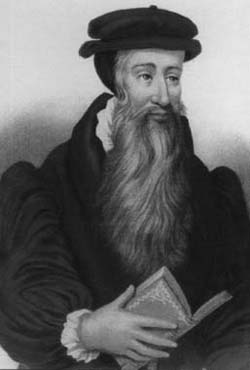
Overlooking the cathedral is the amazing Necropolis. It's kind of creepy, being a graveyard and all, but the structures are amazing. It's bulit on many levels, up both sides of a large hill. Most of the monuments date back to the 17 or 1800s. However, the largest structure, and the most important, is the monument to John Knox, the famous Scottish Reformer. Scotland is very proud and haunted by its Protestant past and this is yet another sign.

3 July--Today we were taken out into the city of Stirling. First we toured the Church of the Holy Rude, an ancient medieval structure, whose past is similar to that of Glasgow Cathedral. It was built as a Catholic church, burned down accidentally, rebuilt, ransacked, and converted to its existing Protestant form. Most notably, the church is the site of the crowning of King James VI of Scotland, son of Mary Queen of Scots.
We also went to Stirling Castle, the ancient fortress used in Braveheart--the histo
 rical events, not the actual movie. It's a brilliant and royal structure which today commemorates all of those battles and other events which led to Scottish independence in the 1200s. More on all of these to come.
Cheers!
...
Scotland is an amazing place.
First of all, the people are beyond friendly. Our family have already been greeted by members of the Bridge of Allan congregation on many occasions. Today we were taken out to a concert and a tour of Stirling Castle by a 70 year old couple, both of which were completely charming.
The beer is also good. My favorite so far is Tennent's Lager--made in Glasgow. I haven't gone to a pub yet, so the thrill of being "of legal age" hasn't really been found yet, but in good time it will. Also, may I add, the beer comes in 15 oz cans of goodness. No wonder Scots are always talking about the fact that their country has a serious drinking problem.
The sports are also fantastic. Any visitor to my Facebook will notice the massive album of photos documenting my trip to Ibrox Stadium, home of Glasgow's Rangers FC--a team who I am completely in love with--not news to most of you. The passion which Scots have for their teams are unparalleled. Yes, lots of Americans love their baseball teams--but I'd posit that the number of major sports in the US reduces the overall deovtion to one in particular. People have their favorites and support them accordingly. But, when you live in a country where football is really all there is--with the exception of a few rugby or cricket nuts--then it's not hard to understand why people are willing to bash in another's head if the time and the place are right.
Then there's tennis. I'm not a huge fan, but the past couple days of Wimbledon action have made me a fan. For those of you who don't know, a Brit hasn't won Wimbledon--played in London--in over 70 years. So, when Andy Murray, a 22 year from Dumblane, Scotland--just down the road from where I am now--comes this close the country goes wild. I'll admit, I cheered for Murray when he played Andy Roddick today. I know Roddick's an American, but I seriously got swept up in all of the emotion. Murray's loss will inevitably send Britain back under their rocks, waiting for the British Open in the south of Scotland at the end of this month.
First of all, the people are beyond friendly. Our family have already been greeted by members of the Bridge of Allan congregation on many occasions. Today we were taken out to a concert and a tour of Stirling Castle by a 70 year old couple, both of which were completely charming.
The beer is also good. My favorite so far is Tennent's Lager--made in Glasgow. I haven't gone to a pub yet, so the thrill of being "of legal age" hasn't really been found yet, but in good time it will. Also, may I add, the beer comes in 15 oz cans of goodness. No wonder Scots are always talking about the fact that their country has a serious drinking problem.
The sports are also fantastic. Any visitor to my Facebook will notice the massive album of photos documenting my trip to Ibrox Stadium, home of Glasgow's Rangers FC--a team who I am completely in love with--not news to most of you. The passion which Scots have for their teams are unparalleled. Yes, lots of Americans love their baseball teams--but I'd posit that the number of major sports in the US reduces the overall deovtion to one in particular. People have their favorites and support them accordingly. But, when you live in a country where football is really all there is--with the exception of a few rugby or cricket nuts--then it's not hard to understand why people are willing to bash in another's head if the time and the place are right.
Then there's tennis. I'm not a huge fan, but the past couple days of Wimbledon action have made me a fan. For those of you who don't know, a Brit hasn't won Wimbledon--played in London--in over 70 years. So, when Andy Murray, a 22 year from Dumblane, Scotland--just down the road from where I am now--comes this close the country goes wild. I'll admit, I cheered for Murray when he played Andy Roddick today. I know Roddick's an American, but I seriously got swept up in all of the emotion. Murray's loss will inevitably send Britain back under their rocks, waiting for the British Open in the south of Scotland at the end of this month.
Subscribe to:
Posts (Atom)